

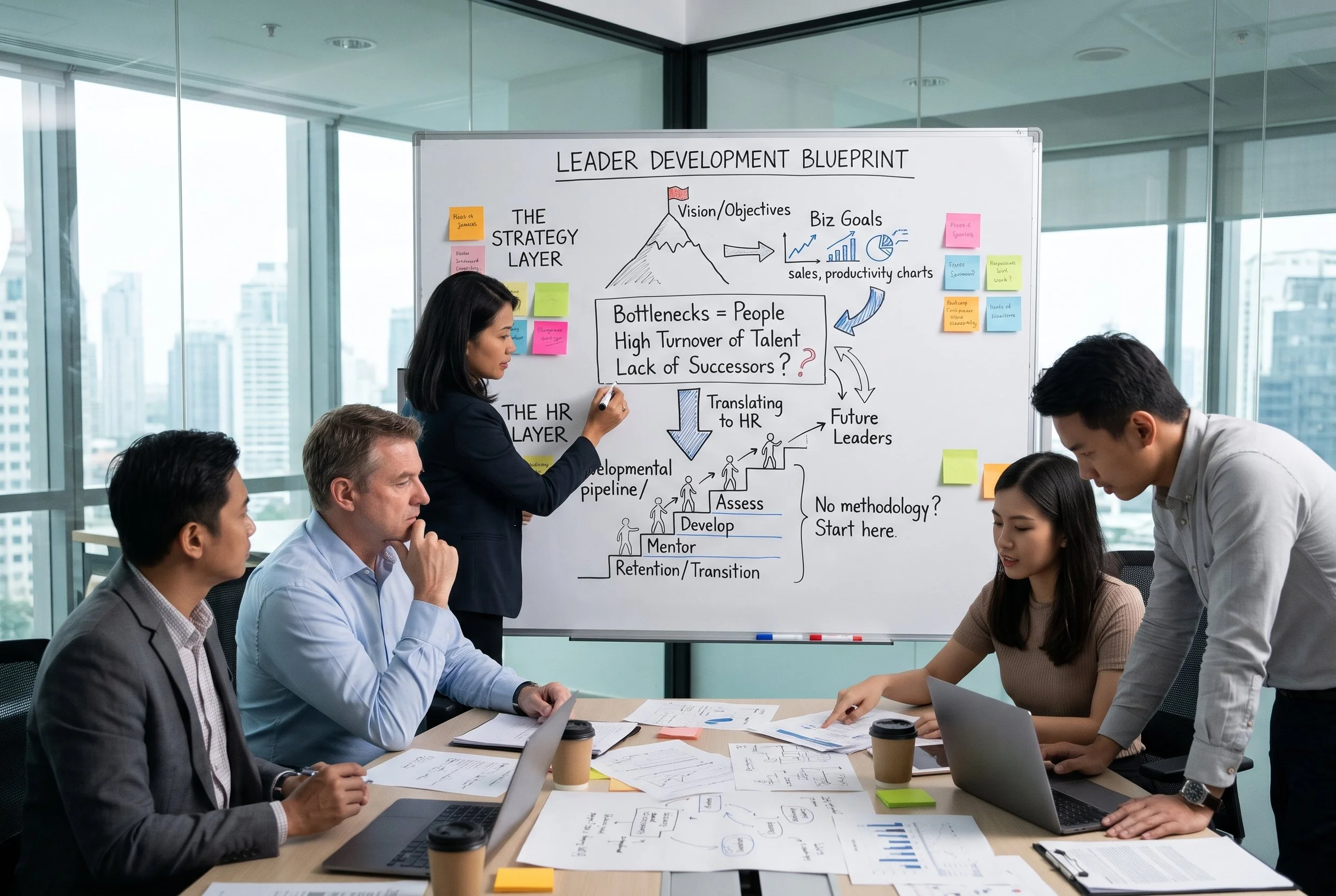
Expatriates who manage ASEAN subsidiaries initially focus on "business numbers" such as sales and productivity. After a while, however, they begin to notice a pattern.
Local managers who can be trusted with decisions are not developing; there are no visible successor candidates, and the most talented people leave early. Many of the business bottlenecks turn out to be caused by "people." This realization turns into a question:
"How do we develop the next generation of local leaders?"
This is the point where progress stops. Most managers do not come from HR, and they have no clear method for designing development programs. Junior HR staff face the same gap. They are told to “develop the next generation of leaders,” yet they do not know where to start.
To answer this question, you first need to set the right starting point for the discussion, and then move through it in the right order.
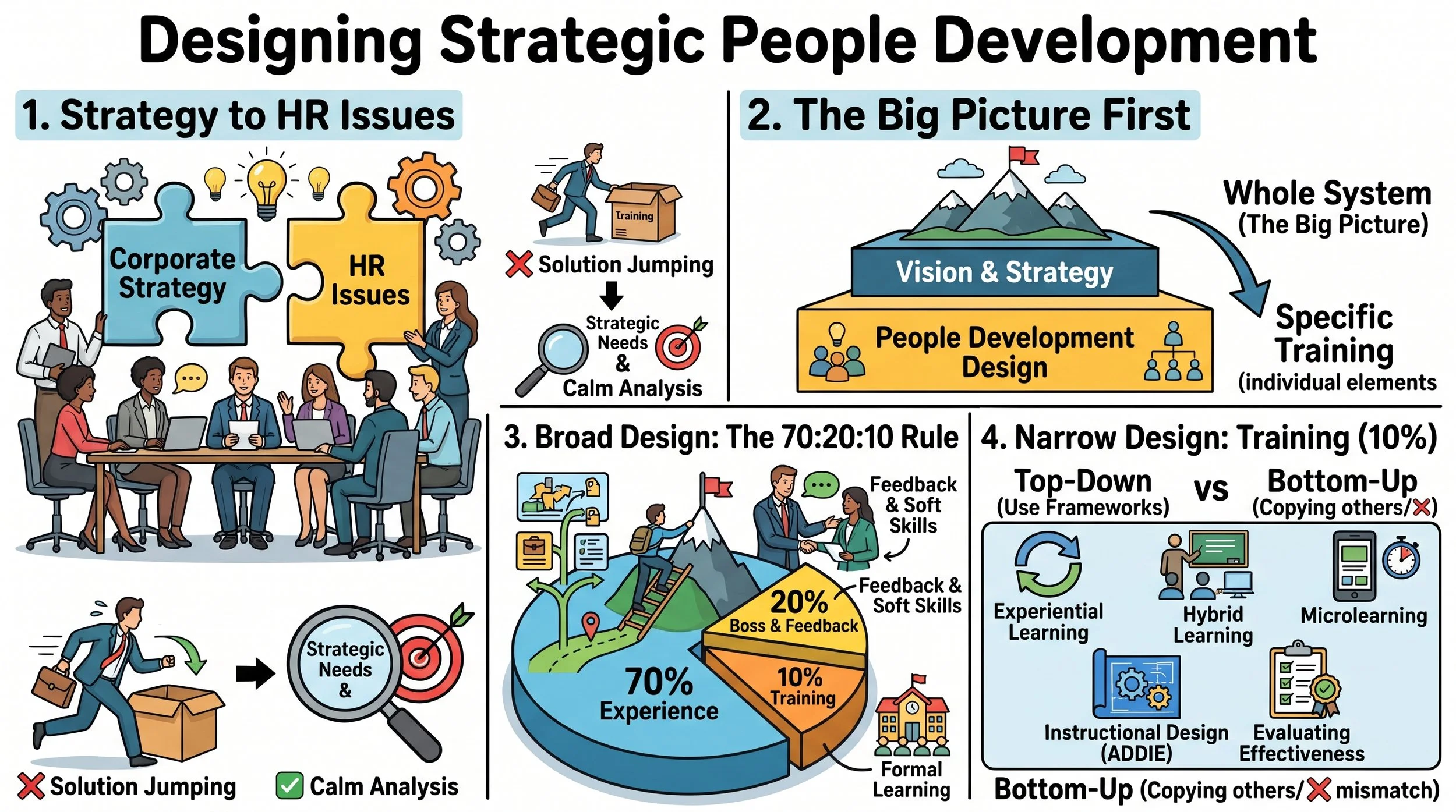
Below is the detailed explanation. Let’s explore together.
Translate corporate strategy into HR issues
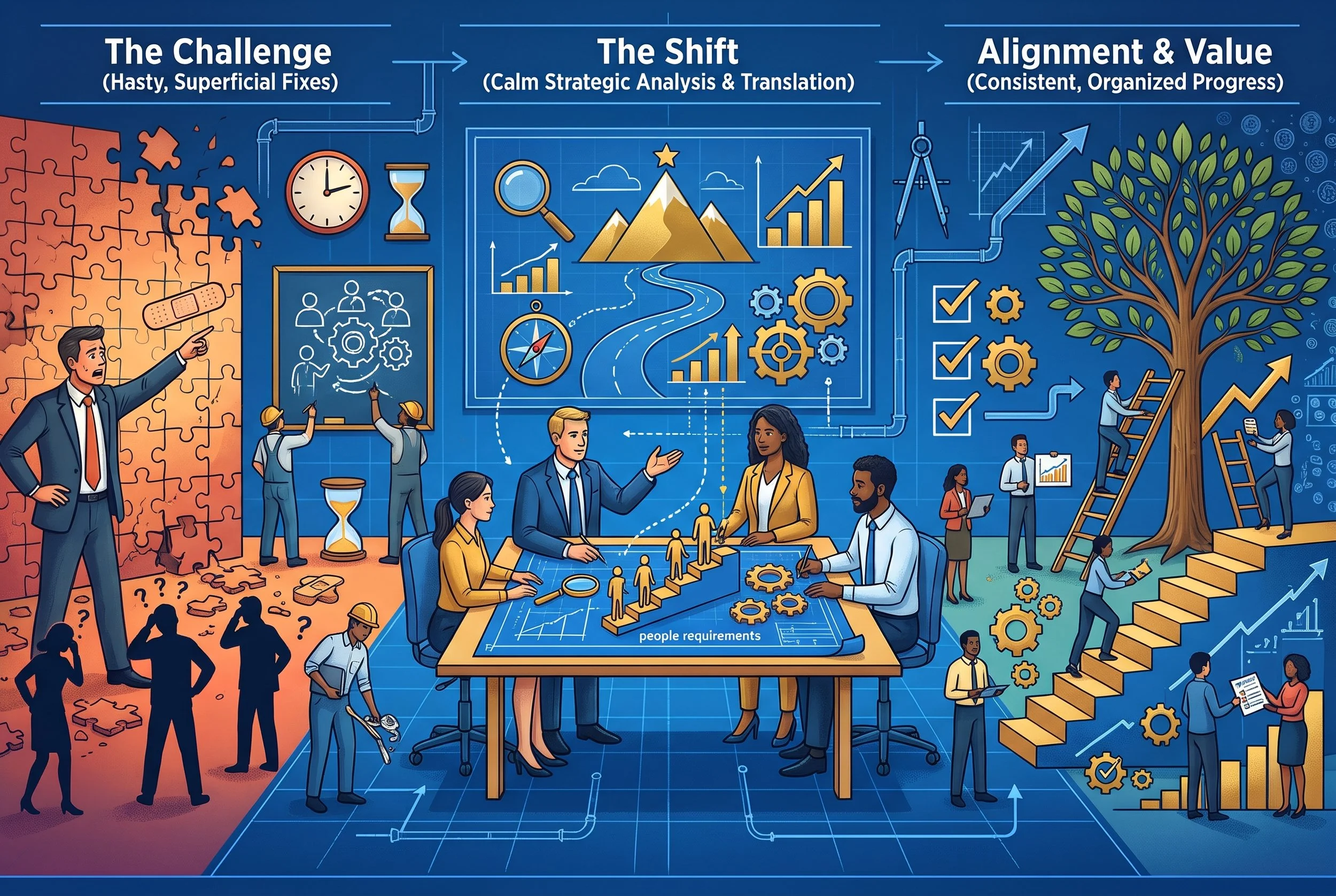
A common pattern is "jumping to solutions": designing "training" that will quickly fix some subordinate behavior that has been bothering you lately. But people development takes time. You also need to analyze calmly whether that behavior is really a critical talent requirement for the company's medium - to long-term strategy.
In other words, what designing people development (and indeed any HR initiative) requires first is understanding the company's vision and the business strategy for getting there, and then identifying the HR issues that must be resolved to achieve it.
Most L&D and HR professionals shy away from strategy conversations. Here’s the secret: you don’t have to set the strategy. You just have to translate it. Understand where the business is going, turn that into clear development priorities, and watch how quickly leaders start seeing HR as a true partner. From this perspective, managers from functions such as sales or finance need not see HR as a separate discipline. It is a natural extension of the business expertise they already have.
Taking this step before considering specific HR initiatives brings consistency to the company's overall design and makes it easier to decide which initiatives should take priority.
2. Discuss at the people-development layer
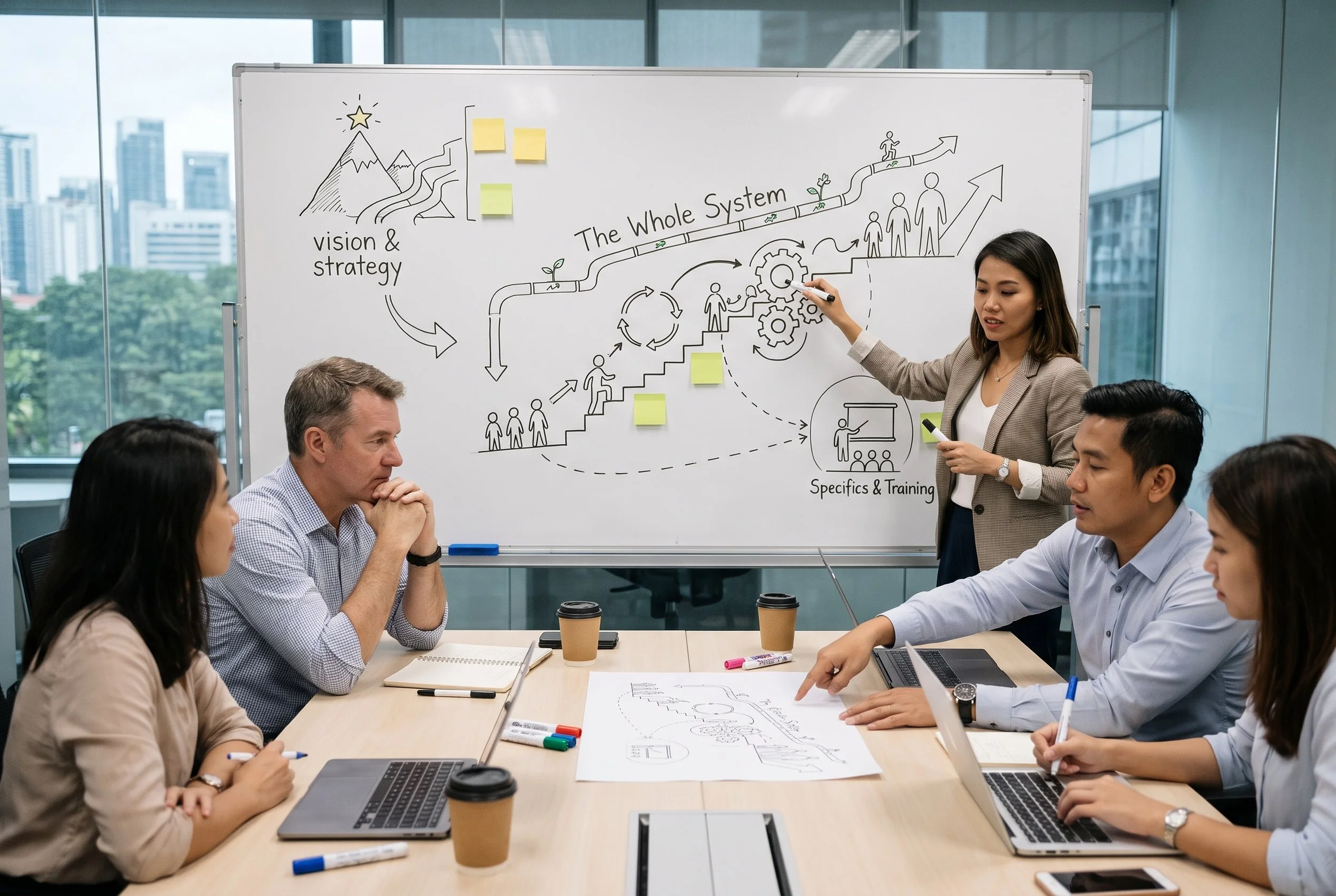
People development design should begin only once the organisation’s vision and strategy have set a clear direction. The same principle of sequence applies within development: start by mapping the complete system through which people grow, and only then design specific training interventions.
3. The broad design of people development: designing the system through which people grow
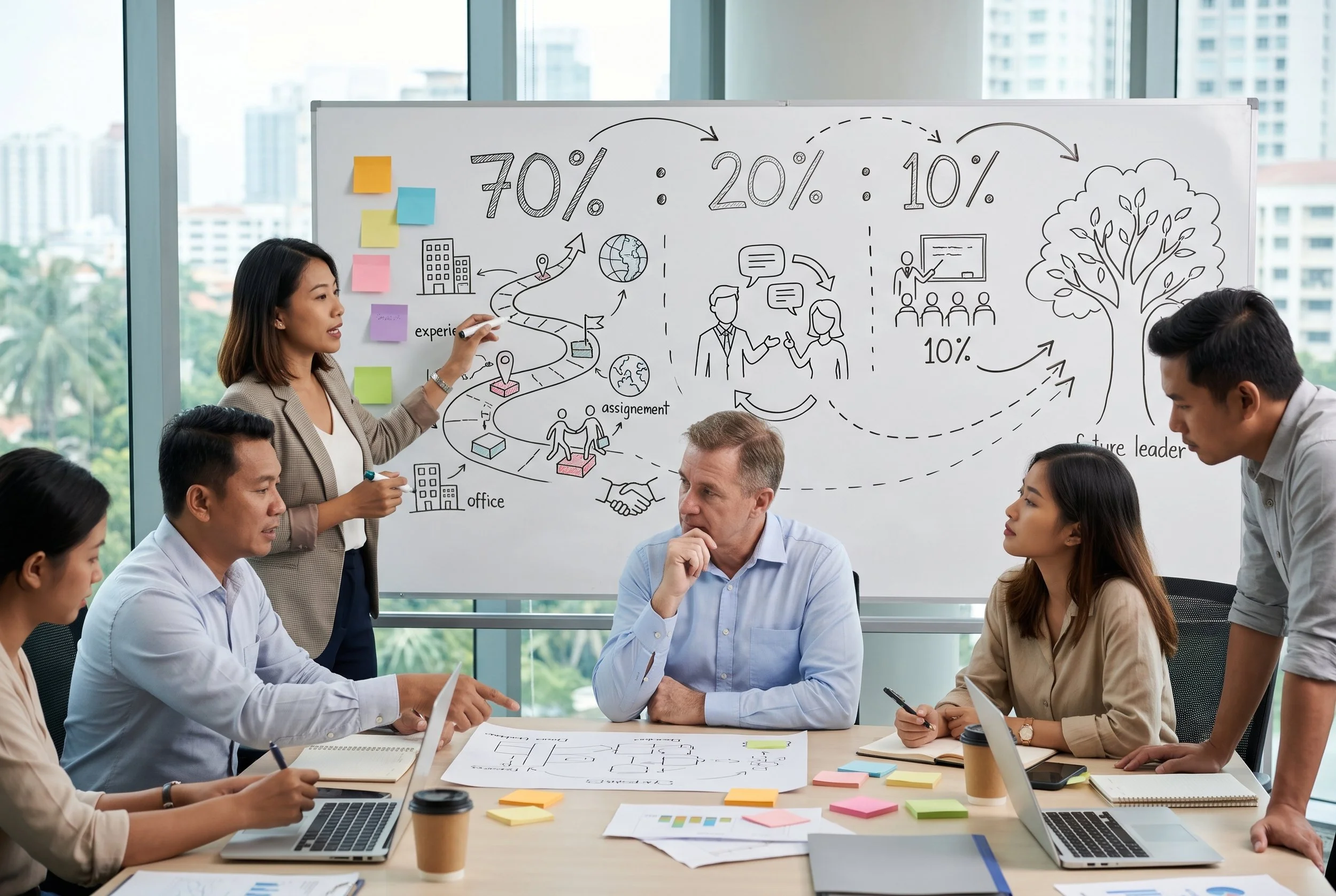
The first thing to grasp is that training is only "one means" to the end of developing people.
A framework behind this idea is the 70:20:10 rule. Based on research by Lominger, it was developed by Morgan McCall and others at the Center for Creative Leadership (CCL), and later systematized by Michael Lombardo and Robert Eichinger.
The idea is that 70% of people's growth comes from experience, 20% from feedback from others, and 10% from formal learning such as training. Using this rule, the scope of what you design for people development widens.
70%: Designing experience.
What career paths do you lay out, and which assignments do you give to which talent pool, and when?
20%: Strengthening bosses' ability to give feedback.
How do you raise managers' own soft skills?
When the discussion reaches the level of succession plans for executives or career design for expatriates, the importance of this structural design becomes even clearer. No matter how much attention you give to the “10%” that comes from training, it won’t lead to real development unless you also design the experiences (70%) and shape how managers engage with their people (20%).
Whether you notice or not, this is the paradigm shift that separates the quality of development design, regardless of whether you come from HR.
4. The narrow design of people development: designing training

Within the broad system, training sits in the "10%" as one means of reflection, but it needs careful design. There are two approaches to designing training itself:
Bottom-up: Bottom-up means collecting examples of training by theme and looking at what other companies or departments do. It gives you a quick sense of "the going rate," but be careful: other companies' examples may not fit your own issues.
Top-down: Top-down means starting from the principles that underpin training design.
Useful frameworks include:
Experiential learning cycle: proposed by David Kolb, the idea that learning deepens by repeating four stages: concrete experience → reflective observation → abstract conceptualization → active experimentation. It guides the design of the back-and-forth between training and the workplace, theory and practice.
Hybrid (blended) learning: a learning design that combines classroom and online learning to achieve both retention and flexibility. Especially when development candidates are spread across distant locations, it keeps you from being locked into a single method.
Microlearning: a design method that breaks learning content into short units of a few minutes and delivers just what is needed, when it is needed. It addresses the constraint that busy frontline managers and expatriates find it hard to set aside large blocks of training time.
Instructional design (ID): the whole design process of systematically building everything from setting learning objectives to designing materials and evaluation methods. As typified by the ADDIE model (Analysis, Design, Development, Implementation, Evaluation), it designs training as a whole by working backward from "what we want people to learn." Experiential learning, blended learning and microlearning, mentioned above, all properly belong within this ID process.
Measuring effectiveness: the four-level evaluation model of "reaction, learning, behavior, results" presented by Donald Kirkpatrick. It is widely referenced around the world as a common language for making sure training does not end once it has been delivered.
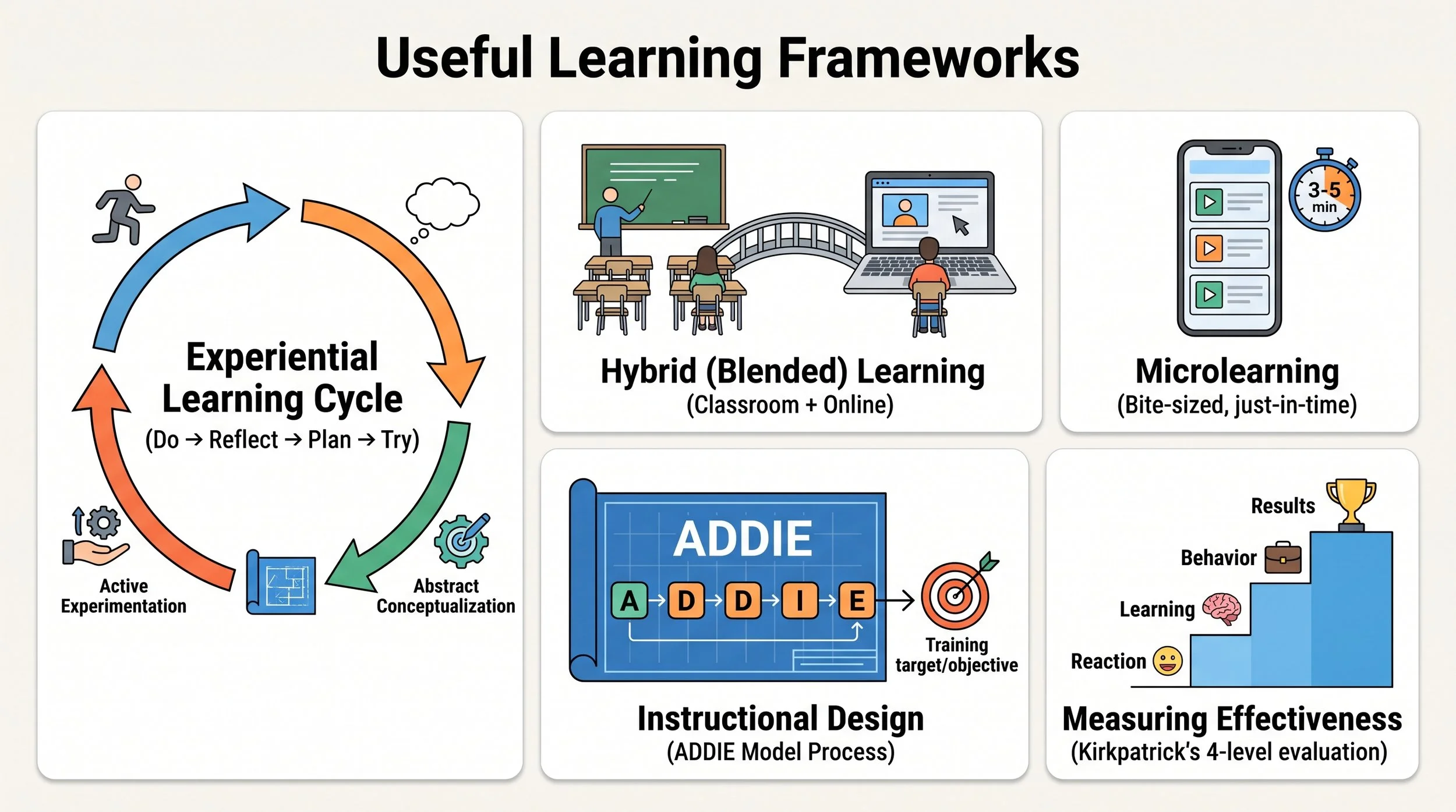
Even without experience, simply knowing these frameworks naturally organizes your thinking and moves forward the work of turning objectives into means. This is a strength that the bottom-up approach alone cannot give you.
Summary
Drawing a blueprint for people development ultimately means working down in order from the big picture to the details:
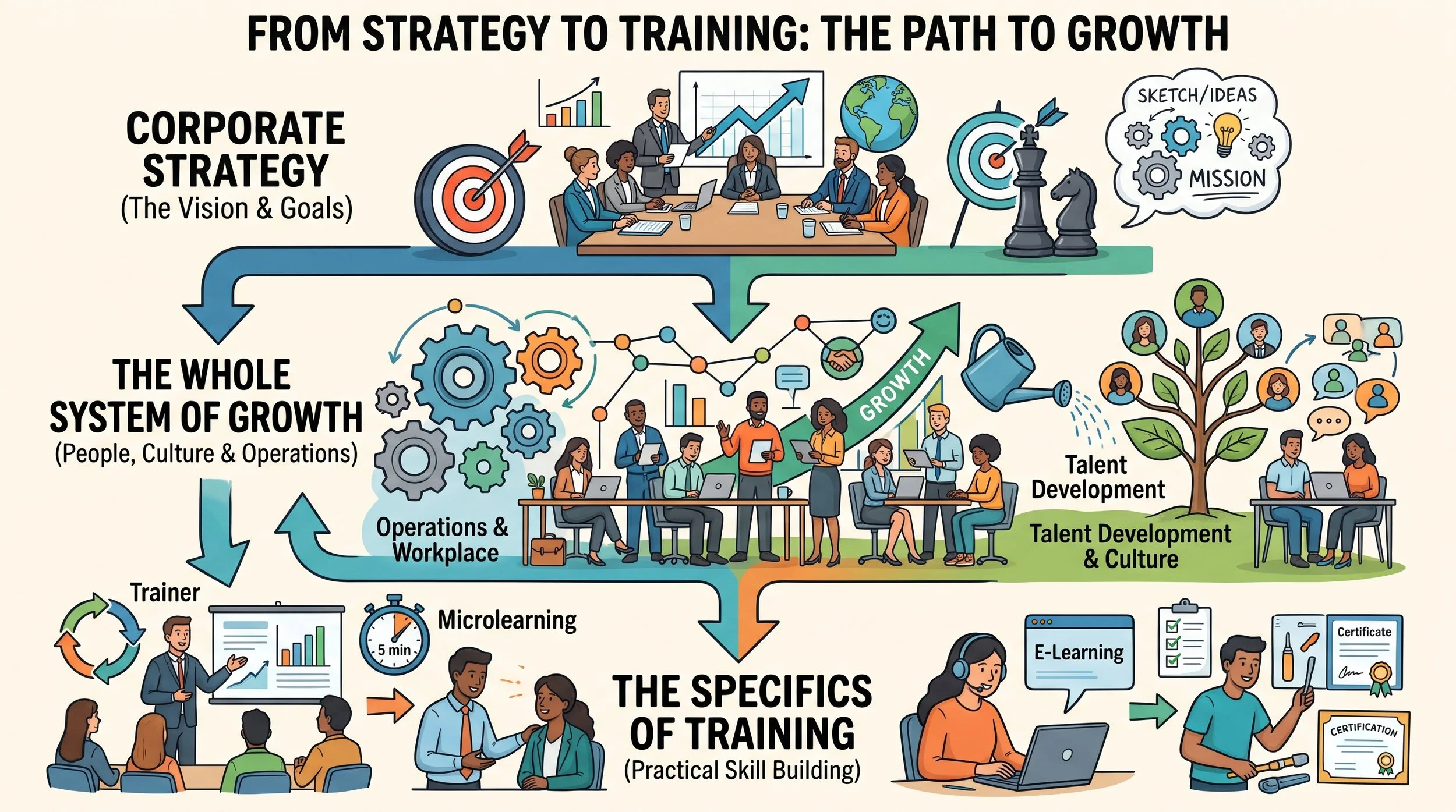
from "corporate strategy" to "the whole system of growth," and then to "the specifics of training."
Start from strategy, and go down from broad to narrow. This difference in the order of thinking changes how persuasive every discussion that follows will be. Whether people-development initiatives lead to the business results they are really aiming for depends on whether you can draw this blueprint.
Thanks to those who came before us, we already have all these tools. In that sense, whether or not you come from HR may not actually be such a big barrier. What is really being tested, I think, is that one pause: whether, instead of diving straight into the solution in front of you, you can step up a level and rethink things in order.