

Consultative Selling

Turn Sales Conversations into Strategic Partnerships
In a competitive market, effective selling is no longer about pushing products or delivering scripted pitches. It is about understanding client needs, creating value, and building trust that leads to long-term business relationships.
Our Consultative Selling Training is designed to help sales professionals, business development teams, and commercial leaders move beyond transactional selling and adopt a more strategic, customer-focused approach. Through practical tools, structured frameworks, and real-world application, participants learn how to ask better questions, listen with purpose, qualify opportunities more effectively, and communicate solutions with greater impact.
Whether you operate in a B2B, B2C, or B2G environment, this program equips your team with the capabilities needed to improve sales effectiveness and strengthen client partnerships.
Ready to accelerate sales performance with a smarter selling approach?
Join our Sales-Accelerator Program and build the skills to convert conversations into meaningful commercial outcomes.
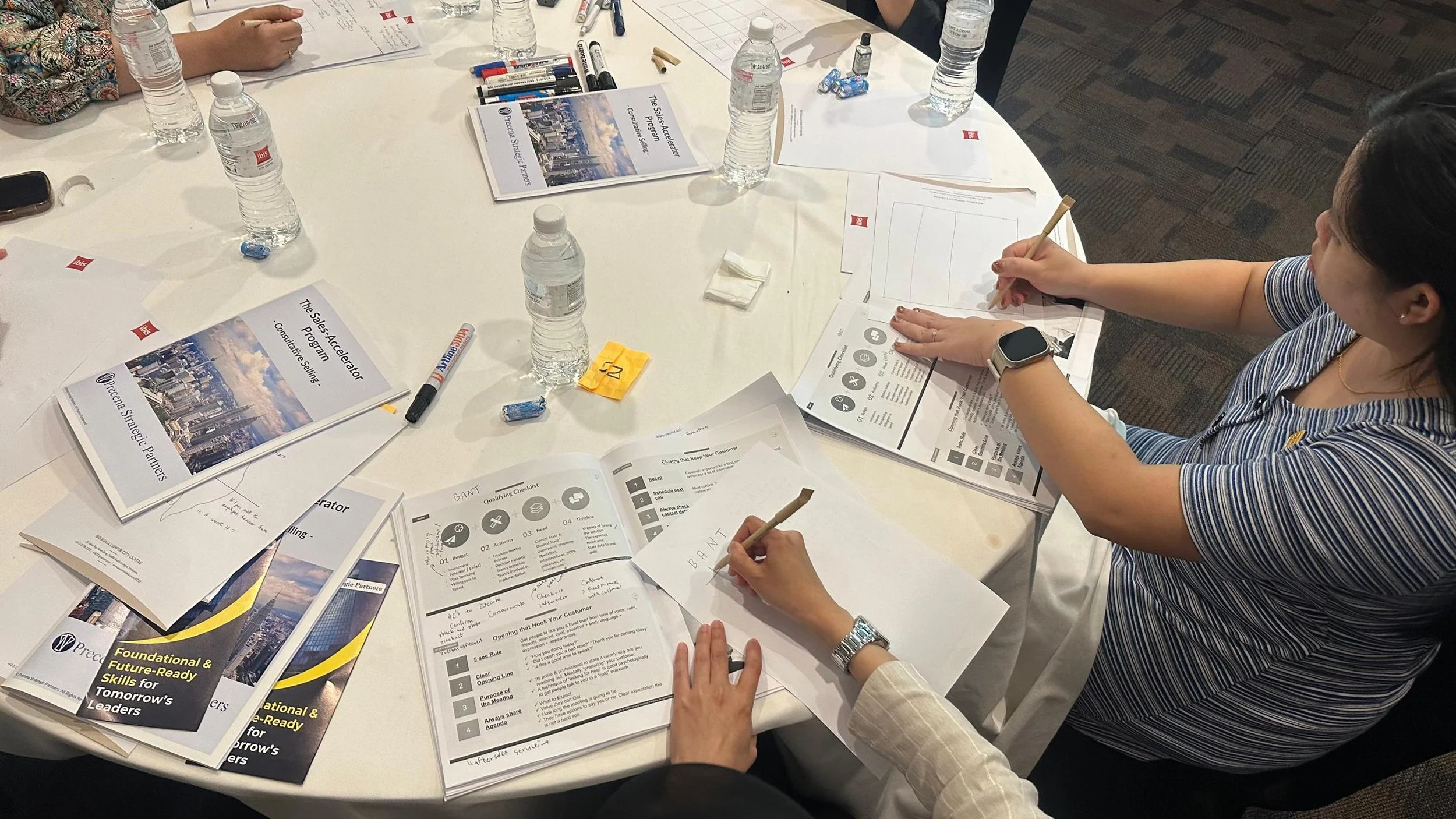
Learning Objective
What Participants Will Learn
By the end of this program, participants will be able to:
Understand the mindset and methodology of consultative selling in B2B, B2C, and B2G environments.
Uncover client needs through strategic questioning and active listening.
Strengthen value-based communication and relationship-building capabilities to support long-term partnerships.
Apply practical frameworks such as SPIN Selling and BANT to improve sales effectiveness and opportunity qualification.
Engage prospects with greater clarity, confidence, and commercial relevance throughout the sales cycle.
These points are aligned with the learning objectives listed in your attached reference
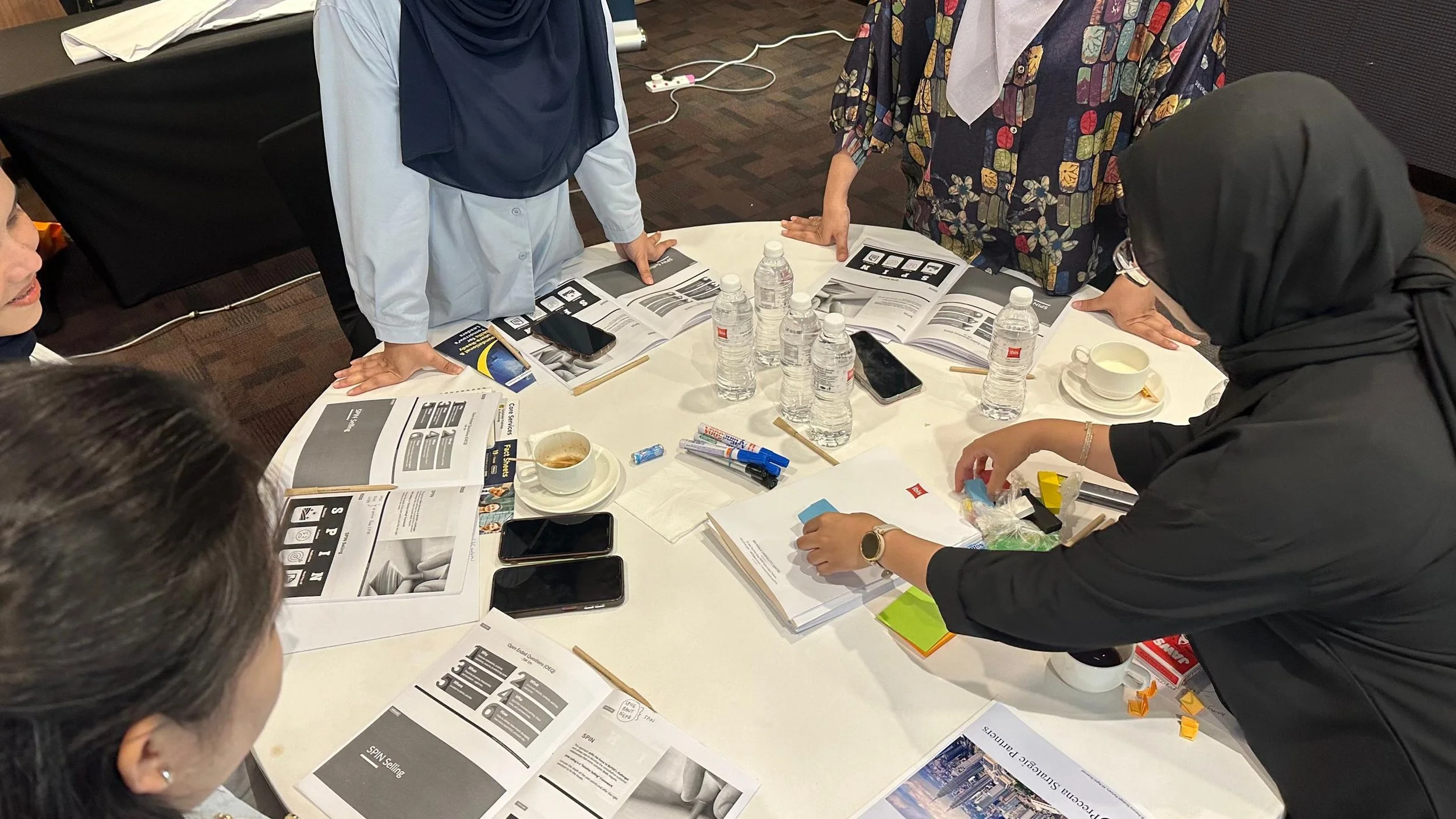
Key Content
What the Program Covers
This program is built to make consultative selling practical, structured, and highly relevant to today’s sales environment.
Participants will cover:
Traditional Sales vs. Consultative Sales
Understand the key differences between product-pushing and value-led selling, and why modern buyers respond better to insight-driven conversations.The 7 Steps of Consultative Selling
Learn a clear framework to manage sales conversations from discovery to follow-up.BANT Methodology
Improve opportunity qualification by assessing budget, authority, need, and timeline more effectively.SPIN Selling for inbound and outbound sales
Use structured questioning techniques to uncover pain points, priorities, and buying motivation.Sales Pipeline Management
Gain better control of sales progress, deal stages, and follow-up discipline to improve conversion quality.Stakeholder and Persona Management
Learn how to engage different decision-makers, influencers, and buyer personas with the right message and approach.Competitive Sales Mindset
Explore practical perspectives for performing in demanding sales environments, including resilience, positioning, and commercial awareness.Experiential Learning Activities
Reinforce learning through case studies, real-life sales scenarios, peer practice, structured role-play, feedback, and evaluation.
This section reflects the content areas in the attached file, including traditional vs consultative sales, the 7-step model, BANT, SPIN, pipeline management, stakeholders/personas, competitive mindset, and experiential learning.
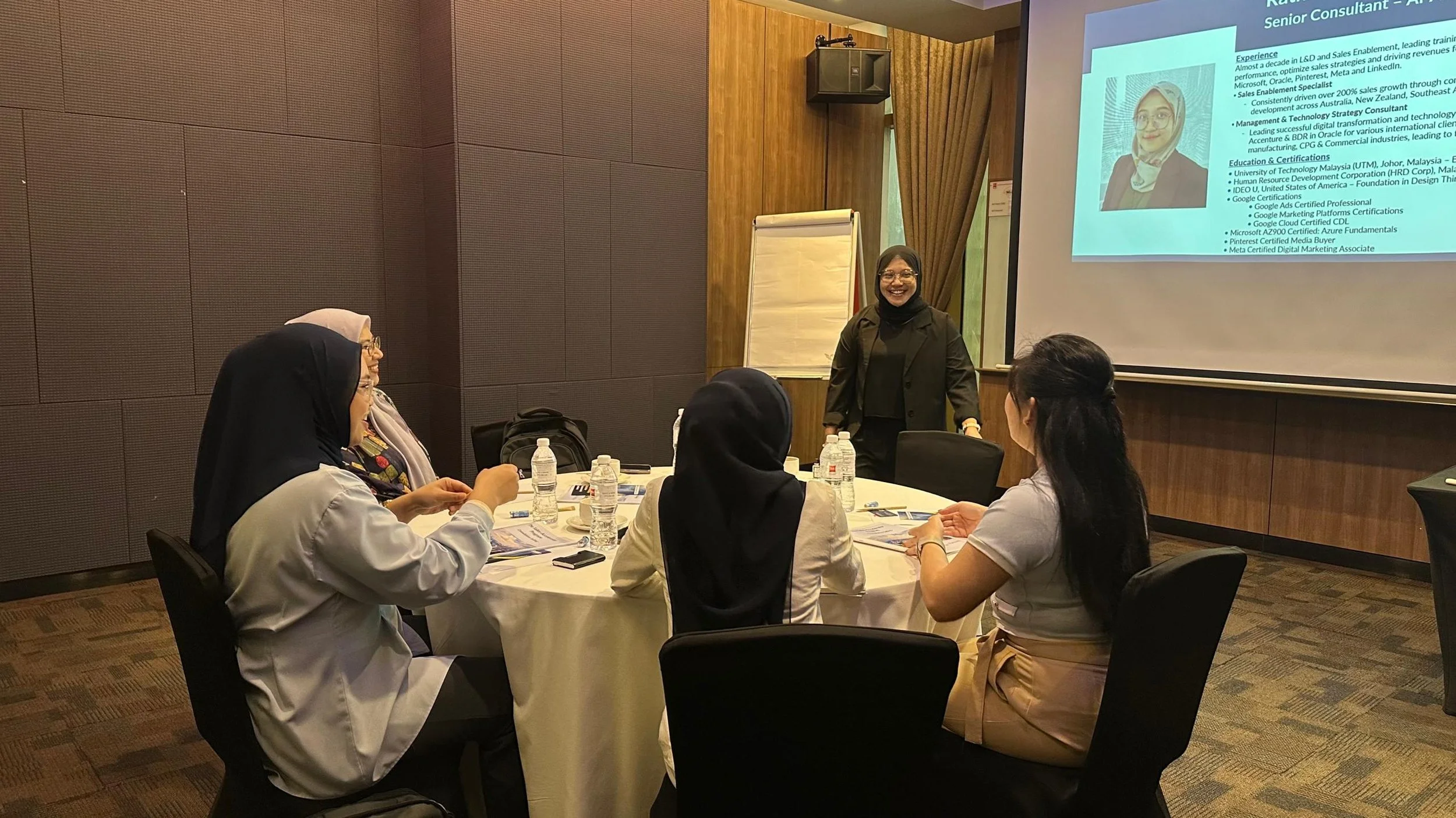
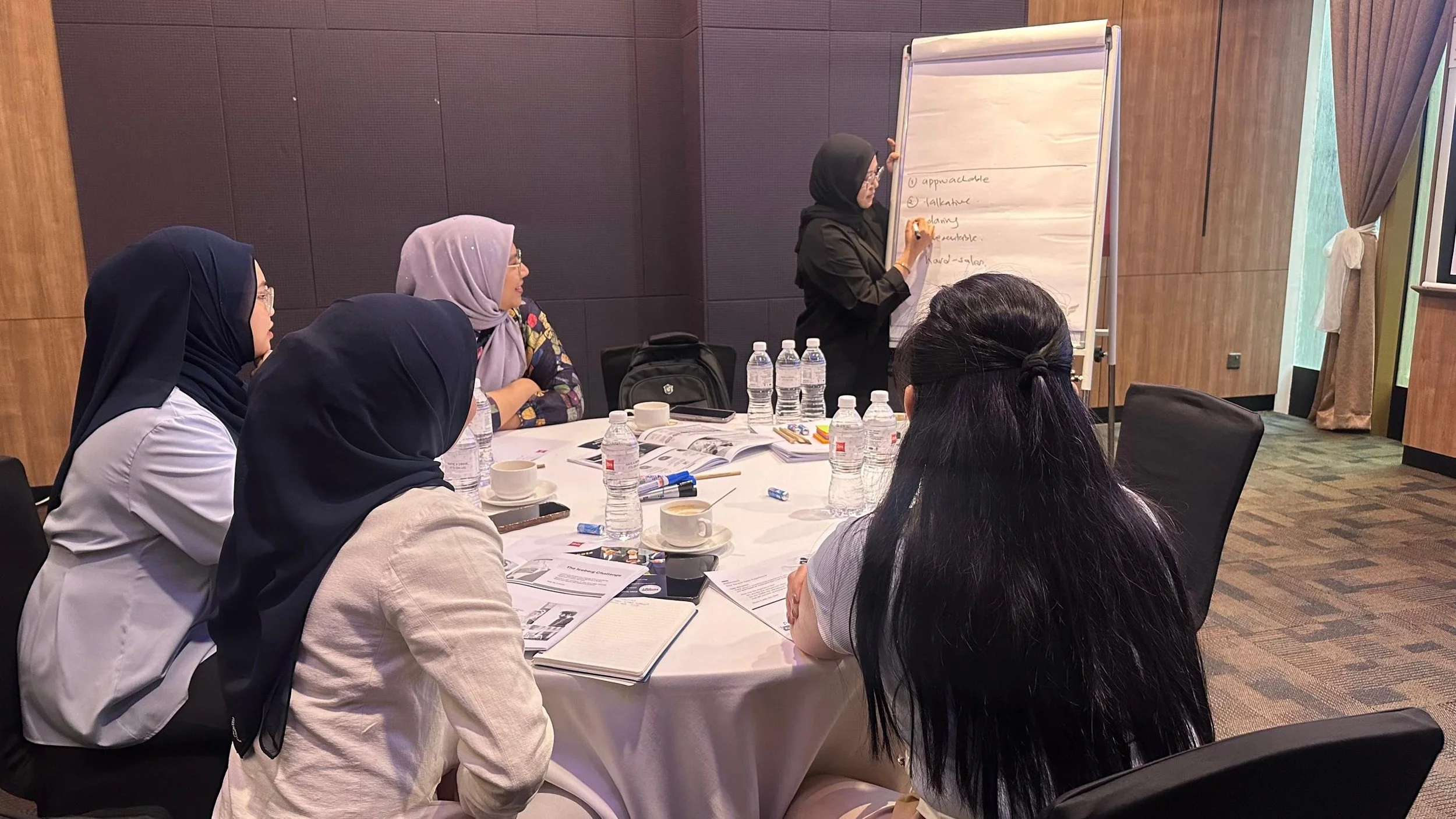
Key Framework
The 7 Steps of Consultative Selling
The framework shown in the attachment presents a 7-step Consultative Selling process. It gives participants a structured path to handle sales conversations more strategically and professionally.
1. Research
Understand the client’s business, market context, industry landscape, and potential pain points before the conversation begins.
2. Ask
Use purposeful questions to uncover needs, challenges, priorities, and expectations.
3. Listen
Actively listen to what the client says and does not say, so you can identify the real commercial opportunity.
4. Pitch
Present a solution that is tailored to the client’s situation, goals, and business needs rather than offering a generic sales presentation.
5. Qualify
Assess whether the opportunity is commercially viable using frameworks such as BANT and other qualification criteria.
6. Close
Move the conversation toward commitment with clear alignment on value, expectations, and next actions.
7. Next Step
Maintain momentum after the meeting by reinforcing trust, confirming action items, and progressing the relationship forward.